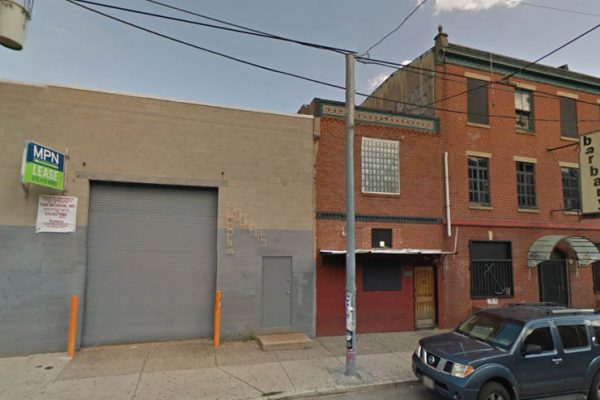
Neighbors sit on their stoops sharing memories of the neighborhood salon once located across the street at 2429 East Norris Street as Chris Wrzesinski, the new owner of the property, hammers away at the building’s west wall. The salon’s been closed for years and, due to neglect, the building’s faced some deterioration. Not yet dilapidated, Wrzesinski saw the building as an opportunity.
“The first reason was the location,” says Wrzesinski, a 26-year-old entrepreneur who’s made a business out of improving shuttered buildings in and around Philadelphia. “It’s close to center city and public transportation and it’s in a good, safe neighborhood. This is actually my first house in Fishtown, I never lived in Fishtown, but I did some research.”
What he found is that, historically, Fishtown has been a family neighborhood. Neighbors have regaled him with stories of growing up surrounded by cousins and grandparents keeping a watchful eye in the interest of security.
“Fishtown is a perfect neighborhood for somebody that wants to feel like that’s home,” he says.
Wrzesinski, who moved to Northeast Philly from Poland in 2004, knows what makes a good neighborhood.
“I heard before I purchased this house this neighborhood has a lot of history, especially when it comes to tough times,” he explains. “Even during the depression those fishermen were taking care of their properties. I can see people are still taking care of those houses.”
Wrzesinski’s story is indicative of the current state of Fishtown. While the rest of the nation faces a debilitating recession and job losses, the average income “has more or less doubled in Fishtown,” according to Henry Pyatt, commercial corridor manager for the New Kensington Community Development Corporation (NKCDC).
“In Fishtown we’re seeing people move in by choice,” Pyatt says, “not necessity. The realtors come first, then retailers. If you’re looking to start a business that depends on disposable income, like the restaurant industry, you need to be around people with higher average incomes.”
With two restaurant locations in development just half a block from Wrzesinski’s building, where he’s planning to install three apartments, and a number of other new businesses in the area, Fishtown’s success is dependent upon the cycle of retailers following realtors.
“I met the neighbors and there were a lot of first time homebuyers, students and people in their 30s,” Wrzesinski says of his first encounter with the area. “They’re just starting a new life, they can’t afford to live in Center City or they don’t want to because it’s so crowded.”
Wrzesinski is also careful to note that long-time residents have been instrumental in keeping the neighborhood alive.
“The older people are the perfect security system,” he says, “They are always looking out.”
The proximity to Center City is part of the key to Fishtown’s popularity. Shanta Schachter, the deputy director for the NKCDC, also points to the access to the Market-Frankford Line. Her organization is convinced making the walk from the subway stop to the Norris and Frankford intersection a safe one is a vital step to improving the area and bringing in even more residents which, in turn, encourages businesses.
“It is changing,” Pyatt says of the neighborhood, “but Fishtown never died. It’s like one community continues to live here while another is just moving in.”
Pyatt points to an example on the corner of Norris and Frankford as a sort of microcosm of the neighborhood.
“The Rocket Cat [Café] serves the newer crowd,” he says, “while Dan’s Meats, right across the street, has been serving the community.”
Economically speaking, an older generation held down the proverbial fort in Fishtown waiting for the current flock of young artists and professionals to come to the area. As a result of two generations’ common thread of dedication, activism and an interest in keeping the neighborhood safe and clean, small businesses continue to grow.
“This is the best market in Philly,” says Wrzesinski, “it’s not gonna get cheaper. Fishtown is too close to Center city to have lowball offers; these people know the value of these houses. These people paid maybe 30 or 40 thousand dollars for their houses in the 80’s. They could sell them for 200 now.”
Schachter also credits the ‘close-knit’ neighborhood community for the recent influx of business interest in the area. Although young families, bohemian artist-types and recent college grads are flooding the area, she says, “if it weren’t for the long term residents who worked their butt off to keep this neighborhood safe, and put in their time and energy to stabilize and green vacant land, people wouldn’t be moving here today.”
As for Wrzesinski’s future, he says “I’m thinking about another purchase and I’m focusing on Fishtown.”