For Tobacco Use Only: Local Glass Art Gallery Gets Zoning Variance Approved by Community
Brad Bernstein, owner of Head Games Philly (HGP; 5-7 W. Girard Ave.), was recently gathering signatures for a petition to be presented at an upcoming FNA Zoning Board hearing. Licenses and Inspections (L&I) had cited his shop, which specializes in selling glass art as well as the supplies necessary for artists to create glass art of their own, for not operating with the proper retail zoning variances.
Bernstein’s store sells apparel and art from local artists, but it’s the functional glass pieces he sells that has some feathers ruffled around Fishtown. Shops that sell pipes fall under PA’s, “The Controlled Substance, Drugs, Device and Cosmetic Act” (P.L. 233, No. 64). This lengthy and detailed piece of legislation defines what exactly constitutes drug paraphernalia. The document even contains specific language like “spoons” and “chillums” to distinguish the different styles of glass pipes.

Bernstein shows off some of his glass art work that he sells./Ptah Gabrie
So how does one go about selling glassware in a state that has such strict regulations on it? You use four simple words: “For Tobacco Use Only.” Then the burden is shifted from the shop owner to the customer to decide whether they will use their new purchase to consume legal or illegal substances or treat it like art and not to use it at all.
The problem for Bernstein was that stores like his generally need a zoning variance to operate because they fall into a “regulated use” zoning category. Tattoo shops also fall under this category. Stipulations include that the business not operate within 1,000 feet of another regulated use business and within 500 feet of a home. If you know anything about city life, you understand that almost anywhere you go, you are probably within 500 feet of a home.
The law is designed to keep stores from selling products like glass roses, which are commonly used as crack pipes, and packaging materials like small bags and vials. Signs stating ”For Tobacco Use Only” hang on the walls of Bernstein’s shop. He admits his customers could use the glass pipes for smoking illegal substances, but with the price tag on some of his art in the thousands, he believes they might think twice before smoking out of it. Despite their name, Bernstein claims HGP is not a head shop, he insists that he’s running an art gallery. And while his glass pieces are functional, they are functional art.
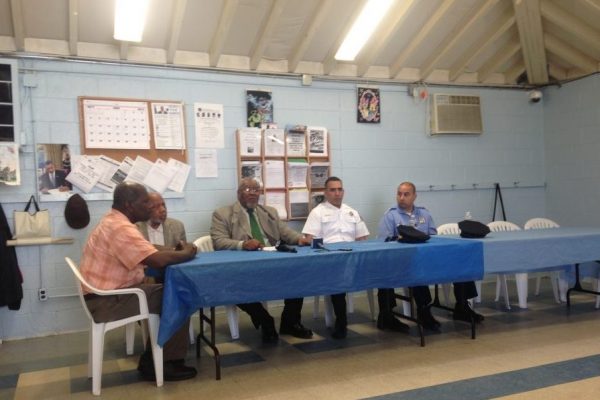
The next step for Bernstein was an appearance before the FNA Zoning board and a vote from Fishtown residents. On February 2, Bernstein and his lawyer, Ron Patterson, appeared before the FNA Zoning Board to plead their case. About 25 people sat in the Fishtown Rec while Bernstein and Patterson presented the details and provisos that would be in place should the community vote in favor of HGP. Bernstein provided Spirit News with a detailed outline of his business as well as a list of items he will not be selling.
According to the document, the provisos in the zoning variance will preclude HGP from selling synthetic herbal compounds, baggies, jars and the glass rose pipes. The zoning variance would also be limited to HGP and will be terminated if the business were to leave the location.
At the zoning meeting, Patterson confirmed and elaborated: “We offered a list of proviso conditions that would be attached to the zoning permit that would limit and restrict the use [of 5-7 W. Girard Ave.] and what could be sold there,” Patterson said.
He also pointed out that the store would agree to sell non-smoking glassware and glass blowing supplies as their principal products. Patterson also outlined many items commonly associated with illicit drugs that HGP agreed not to sell. “No sale of roach clips, coke spoons and similar,” Patterson said.
After a 10 minute presentation, the audience was invited to ask questions directly to Bernstein and Patterson. Sam Thomas, NKCDC’s Commercial Corridor Coordinator for Girard Avenue, spoke at the hearing.
“I want to officially give NKCDC’s support to the project. This is not one of those stores that you see on Kensington Avenue that sells dime bags or whatever. I would urge you to consider this an art gallery,” Thomas said.
According to Bernstein, he is providing an outlet for world-class artists living locally to exhibit their work. Local glass blower Brian Regan of Bounty Hunter Glass was at the hearing in support of Bernstein.
“His business is giving me an outlet to sell my artwork,” Regan said.
There was legitimate concern from the community that people who may be engaging in illegal activity in close proximity to HGP would get supplies to consume drugs from the store. One man in the audience voiced his concern.
“There’s no way really to put it,” he said. “The clientele that one might find at Front and Girard?…Tell me categorically, they would not be your customers.”
Bernstein responded sharply: “They’re not our customers. When we got there we had dopers sleeping on the whole block. It was me and three empty spots. If you look at it today, they’re not sitting there anymore.”
After a vote, the variance was granted to HGP. The official variance will be finalized by L&I, but the Department takes the concerns of the neighborhood and the outcome of the community vote into consideration.
“Once the community makes their statement, we send a letter through and make sure that’s what happens to the best of our ability,” Matt Karp, Zoning Committee Chair and Executive Officer at FNA. said.
HGP’s hearing before L&I is open to the public, and will take place on March 2.
According to Bernstein, glass pipes are only a fraction of what he is trying to do with HGP and he doesn’t want to get bogged down on a small piece of what glass art and glass blowing are in Philadelphia.
“A glass sculpture in the form of a water pipe is considered a pipe, but it’s really art. There’s a whole movement behind it,” Bernstein said. “We’re looking to give local artists a venue.”