Riverwards Psychos: A Collection of Local Killers You’ll Be Glad Are Dead or In Jail
Whether you think they are evil, disturbed or just straight up crazy, people have both repulsed and fascinated by the lives and minds of serial killers. The Riverwards are home to some of the sickest, baddest mofos in Philly’s history. Members of our staff did some digging and made this list of five sociopathic fucks that at one point called these neighborhoods home.
Alex “Reds” Rivera
By Ptah Gabrie
Alex “Reds” Rivera once stood on a Kensington street corner while being interviewed by BBC journalist Louis Theroux. Rivera was wearing a $25,000 chain. Theroux was wearing a bullet-proof vest.
Rivera is one of the most colorful and powerful figures in the documentary. He was basically the Scarface of Kenzo, with a couple hundred extra pounds on his frame. The dude was like Biggie Smalls fat. He was at the head of a large scale criminal organization. Rivera is reputed to have engaged in acts of violence, even murder, to hold down his turf. He was sentenced to life in prison for drug trafficking in 2011.
Like Al Capone, Joey Merlino and Tony Soprano, Reds liked being in the public eye. He had no problem standing on the corner with tens of thousands of dollars worth of jewelry in the Badlands because if you messed with him you’d be in the vacants—“The Wire” style. The best part of this documentary (besides watching a fat, red-haired Hispanic man refute his kingpin status while laughing as jovially as a demonic Santa Claus) are the farm animals roaming around a standard trash strewn Kensington lot next to him. I’m pretty sure it’s a power thing, like when Tony Montana buys a lion…or was it a tiger? Having goats counts for something. One thing’s for sure: Alex “Reds” Rivera is one of the baddest mother fuckers ever to walk the streets of Kensington.
From the BBC Documentary “Law and Disorder in Philadelphia.” It’s long but worth watching:
Marie Noe
By Megan Matuzak
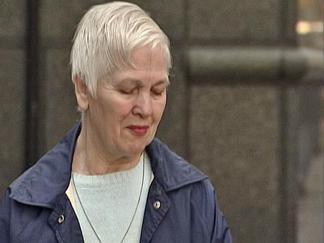
On July 12, 1963, Life Magazine published an article about the infant death trend. Interviewed in this article were Andrew and Martha Moore, a couple who had lost eight children since their first in 1949. However, everyone in West Kensington knew the Moores as Art and Marie Noe.
When Art eloped with Marie she was barely literate and was unable to complete simple arithmetic. Marie also in several instances told her husband that her blood was “wicked” due to a transfusion she received and that several drugs had been tested on her at a young age.
Shortly after their elopement they had a baby boy, Richard Allen, in 1949, who passed away after one month. The Noe’s second child, Elizabeth, born in September of 1950, passed after just five months. In both instances, Marie was the only person present when the children were discovered dead. Both were DOA, no autopsy was performed on Richard and Elizabeth’s autopsy was incomplete.
The trend continued and eight more children were born to Art and Marie between 1950 and 1968, not a single child made it past 14 months. Most of the deaths were attributed to “aspiration of vomitus” or “bronchopneumonia”.
The early autopsies had files missing and later autopsies led authorities to believe the deaths were natural or accidental. The babies had no major injuries to indicate any kind of trauma and as far as authorities were concerned it was just a series of poor luck and mysterious circumstances.
Not until 1998 after an investigation by Philadelphia Magazine’s Stephen Fried into the mysterious deaths did Marie Noe admit to suffocating 8 out of her 10 children in the span of 19 years, the most of any mother in American history, to police. Noe, 81, was convicted in 1999 and sentenced to five years of house arrest and 20 years probation. Today, Marie Noe is 86 years old.
“Elizabeth was a lot stronger than Richard was, and she was fighting when the pillow was over her face. I held the pillow over her face until she stopped moving,” Noe told police in 1998.
Joseph Kallinger
By Ptah Gabrie
Joseph Kallinger was a psychotic schizophrenic from Kensington. Before you say, “That isn’t news” let me remind you that his murderous rampage occurred in a time where people left their doors open and would never suspect the neighborhood cobbler to be a serial killer.
Joseph Kallinger was born in Northern Liberties. He raised a family and worked as a shoemaker in Kensington. At some point Kallinger began to lose his mind. He went on a rampage across South Jersey, killing and raping the whole way with his 13-year-old son at his side. He almost got away with the three homicides had it not been for a smooth talking writer and Kallinger’s lust to be immortalized for his crimes.
In the book “The Shoemaker,” author Flora Rheta Schreiber describes him as
“A lover who needed images of bloody violence to maintain his sexual potency.”
She befriended Kallinger while he was incarcerated and dissected every wicked synapse of his twisted mind for her book. She convinced him to confess to committing three murders, one of which was his own son, allegedly for insurance money. According to an Inquirer article from 1996, his living son made a deal to drop the murder charges in exchange for his cooperation. That same article says that Kallinger was convicted of three murders and died in prison in 1996 at the age of 59.
Here’s an interview (sort of thing) with Kallinger:
By Bob Stewart
Frederick Heidenblut
By Bob Stewart
Apparently it was NOT time to make the donuts. Frederick Heidenblut killed his boss, Gottfried Kuehnle, at Kuehnle’s home and bakery on Frankford below Girard.