Vying for a Casino License: Will Wynn Win?
Steve Wynn is a likable kind of guy. A cardigan over his tie affords him an approachable, casual appearance. When he talks to you, it’s close and confidential, hi stone sometimes a near-whisper and always conversational, with a friendly touch on the arm or shoulder occasionally thrown in. If you watch him, you’ll see he talks to everyone like that—even when there’s a microphone in front of him.
Yet no matter how colloquially he presents himself, it’s impossible to forget thatthe impeccably tanned and coiffed 71-year-old is a casino mogul who’s worth billions.
He played a role in the 1990s revitalization of the Las Vegas Strip, and he’s operated casinos everywhere from Atlantic City to China. Wynn is now bidding for a spot in Philadelphia—specifically, Fishtown, not far from where SugarHouse is located.
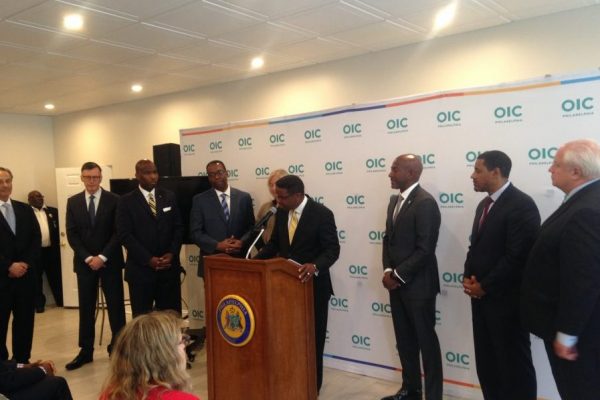
In a recent presentation before the Pennsylvania Gaming Control Board and interested Philadelphia residents, Wynn presented his case for why he should be awarded the city’s second casino license. Though he told the audience that Philadelphia is a place that he’s known and loved for a long time, he also said that he would skip the “love stories” he had about the city and get straight to business.
“The Pennsylvania legislature passed the bill to legalize this business of casino gaming for three principle reasons: to create jobs, raise tax money, and increase tourism,” Wynn said. “I want to talk today about how to do that.” He acknowledged that the face of legalized gaming in America outside of Nevada is not pretty—casinos end up being “boxes of slots”, which he stressed was not the sort of place his company would ever build. Instead, Wynn presented himself as something different from the conventional casino tycoon.
“I’m the son of a bingo operator,” he said. “Everything that I ever had came as a result of somebody playing a game that you could classify as gambling.” Because it was always a money-maker for his family, he recognizes the built-in dupe that is gaming. “I don’t trust gambling devices, because they’re all the same.”
What’s important, Wynn said, is not the casino itself, but what revenue from the casino makes possible. “What moves people is experiential moments: the fun of staying in a beautiful hotel room, going to a spa, eating in a fanciful restaurant with great food, enjoying entertainment and shopping. It’s remarkably the same everywhere.” He added that it’s the people providing these services that make the experience truly enjoyable.
“Buildings and stuff matter, but only people make people happy.” Wynn spent a lot of time downplaying the ‘casino aspect’ of his proposed casino, describing “a well-trained staff, great restaurants, great shopping, conventional meeting space, that happens to have a gaming room attached to it which will pay for all this.” He went on, “You can take your family there without ever coming near a slot machine or a gaming table.”
As to why he chose Philadelphia, Wynn said, “We think there’s a chance of being in one of the major cities in America, where we could make a statement with gorgeous hotels and fantastic amenities that are financed, or made possible, by the existence of a casino room that’s nearby.” He also said that the space he’s chosen contains “enough land to have a park, which will make me popular with my neighbors.”
He stressed other ways he would make himself popular among locals, including the educational support Wynn Resorts provides to communities through the work of his ex-wife, Elaine. Elaine is both Director of Wynn Resorts and National Chairman of Communities in Schools, a drop-out prevention program which is already active in Philadelphia. “We have always supported education because it’s good business for our employees and their families,” he said. “I’m going to work with community leaders and people who are active and effective in their community to find out how we can play an intelligent role in making life better for the people we live with.”
After the presentation, Wynn allowed attendees to get a little personal time with him during an informal press conference. The laughter, applause, and murmurs of appreciation throughout his speech were no fluke: the room was full of admiration, fascination, and excitement as he chatted with audience members after making his case.
When I approached Steve Wynn, the first thing he asked me was, “Did it make sense?” Of course, his proposal was straightforward and easy to understand. “It’s not complicated!” he said. “The law says ‘tourism, taxes, and jobs’. The only thing that really matters is the tourism part, because in order to do tourism, you have to give people a reason to come.” After building the reason to come—hotel, casino, restaurants—the jobs and tax revenue logically follow, Wynn explained.
However, what’s most important to us in the Riverwards is the impact to the neighborhood itself—we won’t support something that benefits the rest of Philadelphia if it doesn’t also benefit our community. I asked Wynn what his casino would offer to the neighborhood. He reiterated that it would not be a gaming-centric attraction: “A totally integrated environment of hotel, room, food, beverage, spa, retail—with a gaming room over there.”
It would be different from SugarHouse Casino, he added: “It’s a different galaxy. But SugarHouse does better if we’re there. All these businesses do better if they clump True, but that doesn’t answer the question of how Wynn’s casino is going to integrate itself into Fishtown effectively. “I don’t know what the local boys are thinking—whether they’re happy that we threw our hat in the ring or they’re not,” said Wynn, “but we did. We are definitely in the game.”
The attendees at the presentation seemed impressed, overall, by Wynn’s proposal. His education activism was an enticing factor for many, as well as the fact that he promised to include attractive landscaping and even a park in his design. Yet although much of what Wynn said sounded good, there are deeper questions that have yet to be answered. Will a Wynn casino benefit Fishtown the most, or could that space be used for something better? Would Wynn Resorts make the sort of contribution to community groups that SugarHouse has become known for? Right now, it’s too early to tell.